
The Mental Game of Climbing: Diamond vs. Gold in LoL
Riot's 2026 apex ranked reset revealed a hard truth: mechanical peaks don't climb accounts — decision consistency does. What separates Diamond from Gold.
Buildzcrank Team Published Updated
Diamond and Gold players don’t have different peaks. Almost every Gold player has, at some point, hit a play that would look fine on a Diamond highlight reel: a clean outplay, a solo kill, a perfectly timed flash-engage. What separates the two ranks isn’t that peak. It’s what happens in the eighteen unremarkable minutes around it, repeated over hundreds of games. Riot handed the League community unusually direct proof of this in 2026: the company had to manually hard-reset its own apex ladder (Master, Grandmaster, and Challenger) after admitting its ranked system had spent months rewarding volatility instead of skill. If the instrument measuring “the best players in the world” needed a hard reset, the gap between mechanical peaks and actual rank is bigger than most climbing guides admit.
Why Your Peak Skill Doesn’t Move Your Rank
Ranked LP is a running average, not a highlight reel. A single game where you 1v3 a fight or land a perfect skillshot adds the same fixed LP as a game you won by grinding out a boring, mistake-free 30 minutes. The problem is that peak plays are memorable and boring wins aren’t, so players end up chasing the wrong signal: practicing the mechanic that produced last night’s clip instead of the decision that would have prevented last night’s loss.
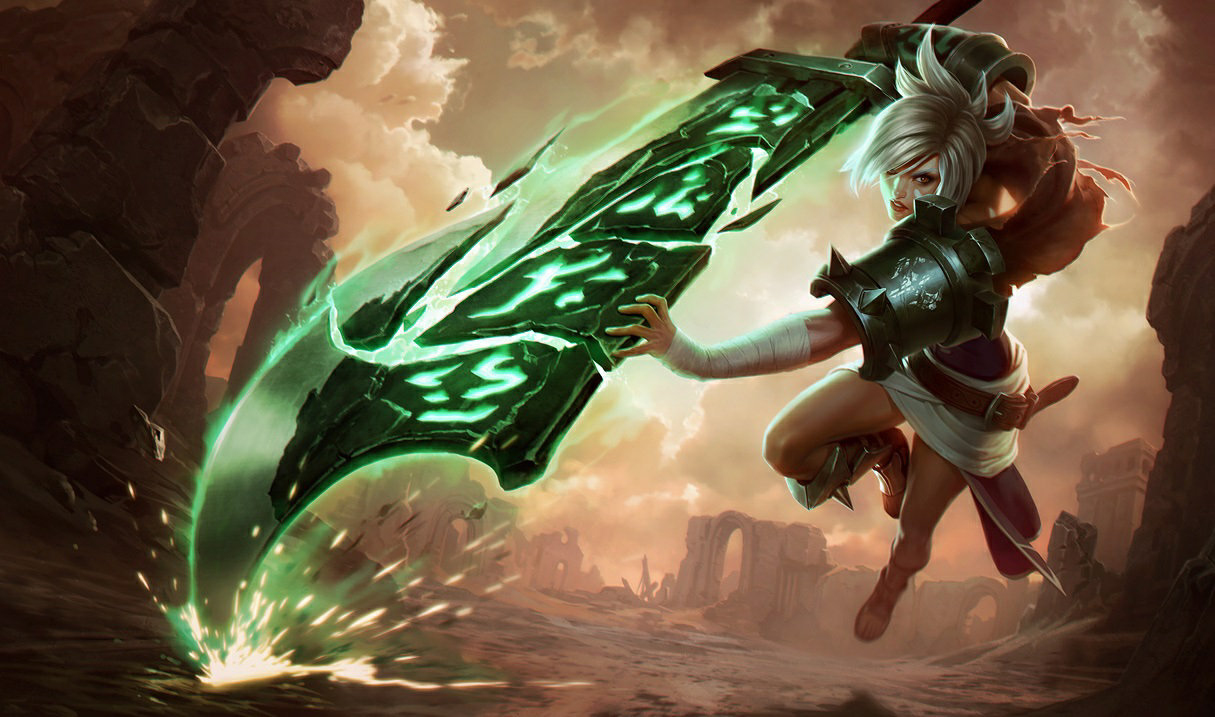
 Riven Riven the Exile top is a useful example precisely because she rewards mechanical peaks more than almost any champion in the game: animation-cancelled combos, wall jumps, stun-locks that look unbeatable in a montage. Two players can hit the exact same Riven combo in the exact same game and land in different ranks a season later, because the combo was never the variable that mattered. What decided their seasons was how often each of them chased a kill two levels down, how often they backed at the wrong wave state, and how often one bad game turned into three. Over a 300-game season, those small, repeated decisions outweigh any single mechanical ceiling by a wide margin, which is exactly why two players with identical peak skill can sit two full ranks apart.
What the 2026 Apex Reset Accidentally Proved
Early in the 2026 season, Riot surveyed the players climbing at Master, Grandmaster, and Challenger and got back the same complaint from most of them: the climb felt volatile, LP gains felt inconsistent, and duo queues were skewing games in ways that had nothing to do with individual skill. Riot’s response was unusually blunt for a company that rarely admits fault in public: it acknowledged it “made a number of mistakes” configuring the ranked system for the season start, and it followed patch 26.09 with a manual hard reset of the entire apex ladder rather than trying to patch the problem invisibly.
That’s worth sitting with, because Master, Grandmaster, and Challenger are supposed to be the part of the ladder where skill measurement is most reliable: the sample size of games is huge, and the players are the most mechanically consistent in the game. If Riot itself concluded the system was rewarding volatility rather than skill at the very top of the ladder, the same distortion is present, just noisier, at every rank below it. A hard reset is Riot admitting the instrument was broken, not that the players were.
The fix Riot shipped alongside the 2026 ranked overhaul reinforces the same point: harsher penalties for dodging and expanded LP protection, both aimed directly at cutting the variance that was drowning out real skill signal. Neither change makes anyone mechanically better. Both changes exist because Riot decided the ladder needed less noise, not more skill expression, to actually measure rank correctly, which is the same argument this piece is making about your own climb. If the company that owns the game concluded variance was the bigger problem, betting your own climb on chasing bigger peaks instead of cutting your own variance is betting against Riot’s own diagnosis.
Autofill Is the Tilt Trigger Nobody Talks About

Autofill is one of the most consistently cited frustrations from high-elo players, including complaints from Master and higher-ranked players specifically about how forced roles and rank decay interact with match quality in ranked queues. The mechanic itself is a necessary trade-off: without it, queue times at the top of the ladder would stretch far past what most players would tolerate. But the actual damage autofill does to a climb rarely comes from the role itself. It comes from what a player does in the ten minutes after getting forced into  Yuumi Yuumi the Magical Cat support or another off-role pick they didn’t want.
That reaction is a chain, and every link in it is a decision point: frustration at champion select, a half-committed pick made out of spite instead of preparation, disengaged laning because “this game doesn’t count,” and a loss that gets blamed entirely on the queue rather than on the string of choices that followed it. None of those links are forced by Riot’s matchmaker. They’re chosen, one at a time, in reaction to a role assignment that, on its own, is just a role. Players who hold rank through autofill games aren’t the ones who never get autofilled. They’re the ones who treat a forced role as a constraint to solve instead of a reason to disengage, which is a decision available at every single rank.
The Decision Habits That Separate Diamond From Gold

Strip away the mechanics and the decisions that actually separate Diamond from Gold are almost boring to list. Checking wave state before recalling instead of backing on autopilot. Tracking enemy summoner spell timers before committing to a fight instead of after. Passing up a kill that’s two levels below you and out of position instead of dying to catch it. None of these require faster hands. They require the same evaluation, repeated correctly, hundreds of times a season, which is a much harder habit to build than a single new combo, precisely because nothing about it is exciting enough to practice on purpose. Wave state alone deserves its own study; a full wave management framework breaks down exactly when to push, freeze, or slow-push based on what you’re trying to set up next.
The reason this is hard to sustain manually is that the “correct” decision changes every game. The itemization that wins a lane at 10 minutes can be wrong by 20 if the enemy team comps around it, and a build order that was correct in one game can lose the next one outright if you play it on reflex instead of re-checking the state of that specific game. That’s the exact gap tools like buildzcrank are built to close, reading your live match state and adjusting build recommendations in real time instead of asking you to remember a fixed guide and apply it identically to every game regardless of how that game is actually going. Consistency isn’t memorizing one correct answer; it’s re-evaluating the same decision correctly every time the inputs change, which is precisely what a structured climbing routine is supposed to train.
Building a Loss-Review Habit Instead of a Tilt Spiral

The single highest-leverage habit change for climbing isn’t anything you do in-game: it’s what you do in the sixty seconds after a loss, before queuing into the next one. Instant re-queuing turns one bad game into a tilt spiral because the frustration from game one gets carried, unprocessed, straight into game two’s decision-making. A short, structured review breaks that chain before it starts.
A 60-second post-loss review that replaces tilt-queuing
-
Name the actual turning point
Not "we lost because of X player", the specific decision (yours or the team's) where the game's win probability dropped hardest. Most losses have one or two of these, not twenty.
-
Separate what you controlled from what you didn't
A bad matchup or an autofilled teammate isn't yours to fix. The decision you made in reaction to it is. Only the second category is worth carrying into the next game.
-
Write one sentence, not a full postmortem
"I engaged before checking flash cooldowns" is usable. A ten-minute tilt rant about the enemy jungler is not: it reinforces the emotion instead of the lesson.
-
Take a real break if the review turns into blame
If step one keeps landing on someone else's mistake instead of yours, that's the tilt talking. Step away for a few minutes rather than queue while still building the case for why the loss wasn't your problem.
Frequently Asked Questions About the Mental Game of Climbing
Does mechanical skill matter at all for climbing in League of Legends?
Yes, but only as a floor, not a ceiling, you need enough mechanical skill to execute your plan. Past that floor, decision consistency across hundreds of games explains far more of the rank gap between Gold and Diamond than mechanical peaks do.
Why did Riot reset the apex ranked ladder in 2026?
Riot publicly admitted it made mistakes configuring the 2026 ranked season and reset Master, Grandmaster, and Challenger after patch 26.09 because the climb had become volatile rather than reliably reflecting skill.
How much does autofill actually hurt your rank?
Less than the reaction to it does. The role assignment itself is just a constraint; the rank damage comes from the frustration-driven decisions (disengaged laning, spite picks) that players make after getting autofilled.
What's a simple way to stop tilting after a loss?
Take sixty seconds to name the one decision (yours, not a teammate's) that cost the most win probability, write a single sentence about it, and only queue again once the review is about a decision rather than about blame.
Do Riot's 2026 ranked changes (dodge penalties, LP protection) affect climbing strategy?
Indirectly, they reduce the variance from dodges and duo-queue swings that used to distort LP gains, which means consistent decision-making is rewarded more directly than it was before the changes.
The 2026 apex reset is a useful reminder that even Riot, with a full season of data, has to actively fight the gap between mechanical volatility and actual skill. You can’t reset your own account the way Riot reset the apex ladder, but you can shrink that same gap by treating decision consistency as the skill worth training, not a byproduct of mechanical practice. If static build guides are part of what’s pulling your decisions off course mid-game, why static build guides fail covers the exact mechanism, and why re-evaluating instead of memorizing is the habit that actually compounds over a season.