

Wave Management Guide LoL 2026 — Complete Breakdown
Master wave management in League of Legends 2026: learn how to freeze, slow push, and fast push to control tempo, time your recalls, and climb ranked.
Buildzcrank Team Published Updated
Wave management is the single highest-leverage macro skill you can develop in League of Legends 2026. While kills dominate the highlight reel, the player who controls the minion wave controls the entire tempo of the lane: when to trade, when to recall, and when to take objectives. Patch 26.9 increased minion wave durability slightly, making deliberate wave manipulation even more rewarding than in previous seasons.
What Is Wave Management in League of Legends?
Wave management is the discipline of controlling where the minion wave sits on the map and using that position as a strategic resource. Every wave state (frozen near your tower, slowly building toward the enemy, or crashing into a turret) creates a different set of opportunities and risks. Mastering these states gives you agency over when you fight, when you base, and when your team can safely contest objectives.
Patch 26.9 made one notable change to the wave management landscape: melee minion health scaling was adjusted and minions now deal slightly less current HP damage to other minions. In practice, waves build up a little more slowly before canceling each other out, which extends slow push windows and makes wave management feel slightly more deliberate than in previous patches. If you learned to wave manage on patch 26.7 or earlier, expect freeze setups to hold slightly longer and slow-push buildups to feel marginally more stable.
At its core, wave management answers three questions on every single wave: Where is the wave? (near your tower, near theirs, or in the middle) Why is it there? (did you push it, freeze it, or did it drift?) What does that position let you do? (all-in the enemy, recall safely, set up a gank, or crash for Dragon). The gap between an average laner and a high-elo player is often less about mechanics and more about answering these three questions correctly, wave after wave. For a broader look at the macro decisions that separate elo brackets, check out our complete guide to climbing in LoL 2026.
The Three Wave States: Freeze, Slow Push, and Fast Push
Wave control comes down to three primary states, each with a distinct setup and payoff:
- Freeze: Keep the wave stationary near your own tower by last-hitting minions at the last possible moment. The enemy must walk up to farm, making them gank-bait and deny them CS without you even trading.
- Slow push: Kill only the caster (ranged) minions each wave and let the melee minions stack up. Over 2–3 waves you build a large, compressed wave that deals devastating damage to turrets when it finally crashes.
- Fast push/crash: Use abilities and AoE to clear the entire wave as fast as possible, crash it into the tower, and then take a free action, recall, roam, or contest an objective.
A fourth sub-state, the bounce, occurs naturally after a crash. Once the enemy tower destroys the incoming wave, the surviving enemy minions walk back toward your side of the map. This bounce is one of the best moments to set a freeze or to transition into a slow push for the next crash. The real skill ceiling in wave management is not learning each technique in isolation: it is knowing which one to apply on the current wave given your champion, your items, the enemy laner’s position, and the map timer.
How to Freeze the Wave: Step by Step
A freeze is the “quiet” wave state (no dramatic crashes, no ability spam) but it is often the highest-leverage position you can maintain in a lane. Done correctly, a freeze forces the enemy laner to choose between losing 20–30 CS per minute by playing it safe or walking into your tower range to get last-hits, handing you and your jungler a free kill window.
The Three Requirements for a Successful Freeze
1. The wave must start on your side of the map. You cannot freeze a wave that is already touching the enemy’s tower. The wave needs to be roughly between the two towers, ideally about 30–40% of the way toward your own tower, so there is room to keep it stable without pulling it under your own turret (which breaks the freeze by letting your tower hit enemy minions).
2. You need a slight excess of enemy minions. If you have 6 minions and the enemy has 6 minions, the wave is balanced and will drift toward your side naturally because your minions receive more damage. For a freeze, aim to have about 3 more enemy minions than your own: enough that the enemy side is “heavier” and holds the wave in place.
3. Last-hit at the absolute last moment. Every auto-attack you throw beyond last-hitting pushes the wave toward the enemy. During a freeze, only touch a minion when it is one hit from death. This sounds obvious, but it requires constant discipline: no “cleanup” autos, no ability waveclear, just clean last-hitting with your basic attack.
Why Freezing Is So Powerful
A sustained freeze denies the enemy an estimated 15–25 CS per 5 minutes compared to a pushed-in wave. That is roughly 250–450 gold lost per 5 minutes: equivalent to a first or second item component entirely. Beyond the gold denial, the enemy must walk up to farm, which is your jungler’s invitation to gank. A wave frozen 30–40% toward your own tower gives the enemy laner a 40–60% longer walk to safety compared to a wave at the center of the lane.
When NOT to Freeze
Freezing is wrong in three common situations: when the enemy jungler is known to be nearby (you become the gank target instead), when the enemy laner has long-range poke that outranges your freeze zone (Lux, Jayce, Ezreal can safely farm and harass you simultaneously), and when an objective is about to spawn and you need to crash-recall first.
Champions best suited to freezing:  Nasus Nasus the Curator of the Sands top ,
  Renekton Renekton the Butcher of the Sands top , and
  Tryndamere Tryndamere the Barbarian King top in top lane, their kits let them sustain through poke while last-hitting precisely. In mid lane,
  Cassiopeia Cassiopeia the Serpent's Embrace mid and
  Morgana Morgana the Fallen mid can freeze effectively because their sustained DPS keeps enemy waves from overwhelming them.
How to Slow Push for Maximum Pressure
The slow push is the art of building a minion avalanche. Instead of clearing the full wave, you kill only the three caster (ranged) minions in each wave and let the melee minions accumulate. After two or three waves without clearing the melee troops, you end up with a cannon minion plus six to nine melee minions all moving as one compressed mass. When that stack finally crashes into a tower, it deals massive damage: a fully built slow push wave of nine melee minions and a cannon minion can strip roughly 2,800 combined HP from a turret in 15 seconds.
The Slow Push Mechanical Loop
- Enemy wave arrives. Kill the three caster minions quickly (AoE abilities work perfectly here).
- Let your melee minions fight the enemy melee minions. Do not interfere.
- Repeat for the next wave. Your surviving melee minions reinforce the new arrivals.
- Once your stack is large enough, typically 6+ melee minions, shove everything into the tower.
Patch 26.9’s change to minion durability (melee minions now deal slightly less current HP damage to each other) means your slow push stacks survive slightly longer before fighting themselves down. The practical result: you can sometimes squeeze a third wave into a slow push where previously two waves were the limit, making the technique marginally more consistent.
The Two Core Slow Push Scenarios
Before recalling: Start your slow push 90 seconds before you plan to base. When the stack crashes, you have a 25–35 second window to recall, buy, and return with minimal CS lost. This is how top lane players hit a first item spike without falling behind in the wave.
Before contesting Dragon or Baron: Slow push a side lane 45–60 seconds before the objective spawns. The stack will keep pressuring the tower while your team contests the pit, forcing the enemy to either defend the tower (missing the objective fight) or let free plates fall.
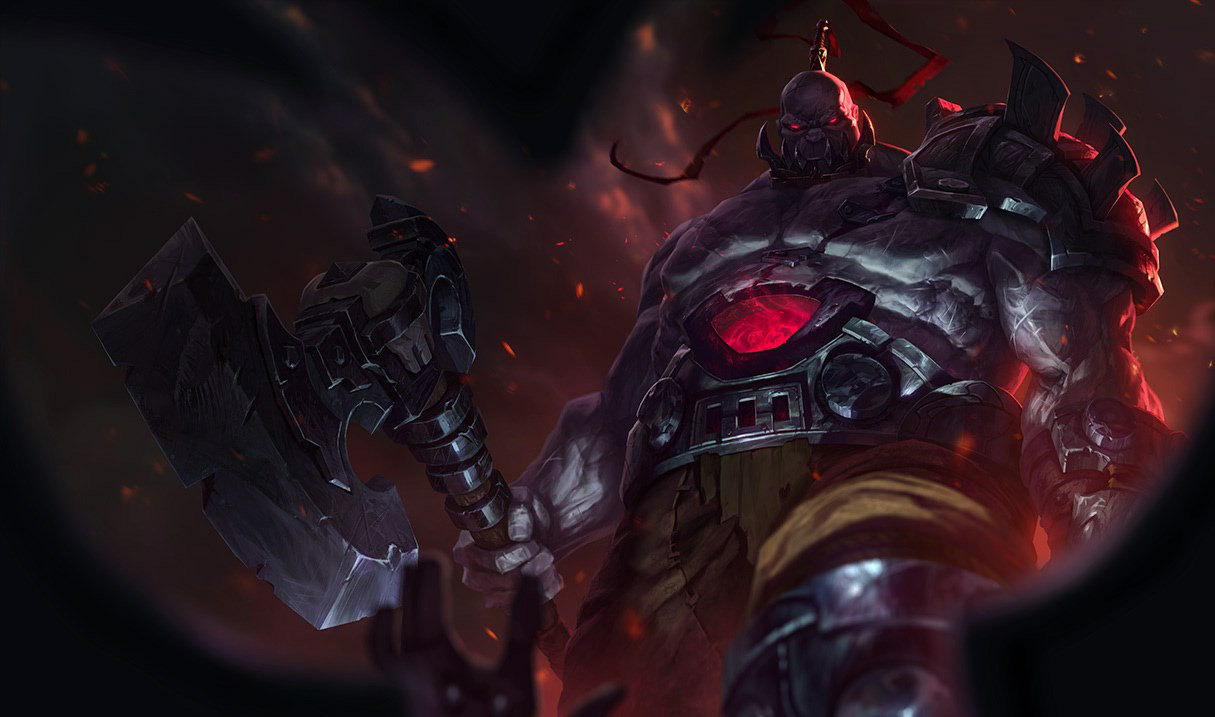
Champions who excel at slow pushing:  Sion Sion The Undead Juggernaut top (his AP build literally splits lanes with zombie form slow pushes),
  Malphite Malphite Shard of the Monolith top (E + W wipe casters in one pass),
  Yorick Yorick Shepherd of Souls top , and
  Gangplank Gangplank the Saltwater Scourge top using Powder Keg chains.
How to Fast Push and Create Objective Windows
The fast push is the most tempo-aggressive wave state: dump every AoE ability into the wave, crash it into the enemy tower as fast as possible, and spend the resulting 20–35 second window on the map. That free time is your currency: spend it on a recall and item purchase, a cross-map roam, a Dragon contest, or a jungle invade.
How the Window Works
When your wave crashes into the enemy tower, the tower kills the remaining minions in roughly 15–25 seconds. During that time, the enemy laner is either farming under tower (busy and not threatening) or walking up to threaten you (away from the wave). Either way, you have a safe window to act. A full 6-minion crash buys approximately 20 seconds; a cannon wave crash with 9+ minions can buy 30–35 seconds.
Patch 26.9 Item Changes and Fast Push
One important shift for fast push users in Patch 26.9: Statikk Shiv was reworked from a pure waveclear item into a scaling on-hit item. Players who built early Shiv specifically for fast push windows, particularly on ADCs like Jinx or Tristana, now need to reconsider their item timing. The reworked Shiv clears waves decently but is no longer the fastest caster-minion eraser it once was. ADC players looking for rapid waveclear should now lean on Sivir’s Q passive, or look at champion kits with natural AoE rather than relying on item-driven fast push. For the full breakdown of what changed in the item shop, see our new items Patch 26.9 guide.
When to Choose Fast Push
Fast push is correct when: an objective is spawning within 60 seconds (Dragon, Rift Herald, Baron), you need to recall and hit an item power spike, your champion can roam and the enemy laner would be disadvantaged by a side lane pressure situation, or you want to transition out of a lane where you have a CS lead but cannot safely freeze.
When NOT to Fast Push
Avoid fast pushing if the enemy laner has better wave clear than you and can immediately freeze the returning bounced wave. You end up pushing, roaming, returning to a frozen wave, and losing your lane position net-negative. Champions who exploit this: Nasus, Cassiopeia, and any champion who thrives on a passive freeze.
Champions best at fast push:  Sivir Sivir the Battle Mistress adc (passive Q waveclear is instant),
  Ziggs Ziggs the Hexplosives Expert mid (W + E combo nukes casters),
  Malzahar Malzahar the Prophet of the Void mid (E + pool wipes entire waves in 3 seconds), and
  Taliyah Taliyah the Stoneweaver mid (W + Q combination).
Wave Management by Role
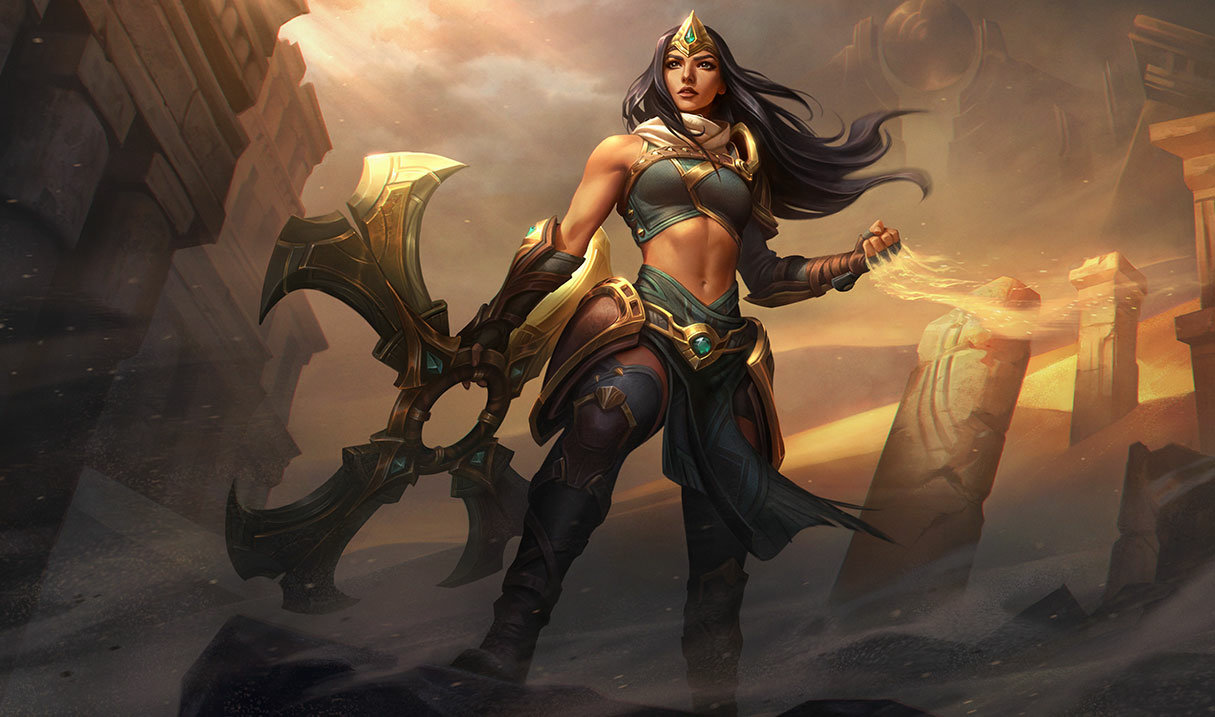
Every role interacts with minion waves differently. Here is how the three wave states map to each position in Patch 26.9.
Top Lane
Top is the longest lane in the game, which makes the freeze especially punishing. A wave frozen 30% toward your own tower forces the enemy laner to walk roughly 22 seconds of exposed river path to reach their CS: ample time for your jungler to arrive. Nasus Nasus the Curator of the Sands top is the archetypal freeze champion: his passive Siphoning Strike gives him a reason to last-hit precisely forever, and a frozen wave keeps him safe while stacking. Sion Sion The Undead Juggernaut top dominates the slow push: his Q and W can kill casters in one rotation, and his zombie passive continues pushing the wave even after he dies.
The dominant pattern for carry tops is crash → freeze. You slow push your wave into the tower, then immediately set a freeze on the bouncing wave while the enemy laner is walking back from base. For the best top lane champions to pair with these wave patterns, see our top lane tier list for Patch 26.9.
Jungle
The jungle does not manage waves directly, but reading wave state is the most important pre-gank skill. Gank a frozen lane: the enemy laner is deep in the lane walking up for CS, they have no escape room. Never gank a pushed-in wave: the enemy is close to their tower and can simply step back; you waste 30 seconds and potentially gift them a countergank.
After a successful kill, always crash the wave for your laner before leaving. A crashed wave after a kill extends the gold advantage by 150–250 gold in denied tower plates and CS.
Mid Lane
Fast push is the dominant pattern in mid because the lane is short (roams are faster) and most mid laners have strong AoE. The standard loop: clear wave with abilities, crash, roam bot or invade jungle, return before the wave bounces back. Assassins who lack AoE (Zed, Qiyana) prefer a crash → freeze rotation to deny the enemy laner while they gain a level or item advantage.
ADC: Bot Lane
In the bot lane, wave management is primarily about syncing crashes with Dragon spawn timers: 3:30, 7:30, and 11:30, start your push 90 seconds before each Drake. Sivir’s Q passive makes this the fastest on any standard ADC; coordinate with your support to poke down the enemy casters so you can crash cleanly. A crashed bot lane wave at 3:45 with your team already in position is how professional teams secure first Dragon at a 90%+ rate.
Support
Your wave management job is to mirror your ADC’s intent. If they are slow pushing, help kill casters with AoE abilities. If they need to fast push, poke the enemy laners so they cannot safely farm under tower after the crash. Supports with strong AoE (Lux E, Morgana W, Seraphine Q) can meaningfully accelerate fast pushes from 6 seconds to 3 seconds: a small but significant difference when you are racing a Dragon timer.
Wave States and When to Recall (and Buy Items)
The most underappreciated application of wave management is economic: your wave state should determine when you recall and what you buy, not just when the enemy laner is pushing. Most players recall when their HP gets low; high-elo players recall when the wave is crashed.
The Core Rule
Recall after crashing, never before. If you recall while your wave is pushing toward the enemy tower, you come back to one of two bad situations: the enemy froze the bounced wave against you (losing you 20–30 CS while you were gone) or they crashed it into your tower (denying plates and CS while you recall teleport back). Both outcomes waste the gold lead you were trying to press.
Three-step recall setup
-
Slow push 90s
Start slow pushing 90 seconds before your recall window.
-
Stack 2-3 waves
Let the pile grow to 6-9 melee minions + cannon.
-
Crash and recall
Crash the mega-wave and recall immediately.
The Three-Step Recall Setup
- Start slow pushing 90 seconds before your intended recall window.
- Let the stack build up over 2–3 waves (6–9 melee minions + cannon).
- Crash the mega-wave into the enemy tower, then immediately tap Recall.
You now have 25–35 seconds before the surviving enemy minions bounce back. That is enough time for a full Recall + shop + teleport back. You return with your new item, the wave is bouncing toward you (ideal freeze or slow push setup), and you have lost at most 4–6 CS rather than the 20–30 you would lose with an uncoordinated recall.
Item Timing: The Economic Layer
This is where “economic wave management” separates Diamond from Platinum. If you know your first completed item costs 2,900 gold and you typically hit that at 8:30, work backwards: start slow pushing at 7:45 so your crash hits right around 8:30. You base with full gold, buy your item immediately, and return with an item advantage before the enemy can stabilize.
Patch 26.9 introduced Doran’s Bow as a new starting item option for ADCs and top-lane bruisers. Because it builds differently than standard Doran’s items, your first recall gold target shifts: factor that into your crash timing if you are testing new starting item paths. Tools like buildzcrank can factor in your current gold, item costs, and game state to suggest the optimal recall window and next item path in real time.
Post-Crash: Reading the Bounce
After your wave crashes, watch what the enemy does with the bounce. If they are recalled, the bounce walks toward your tower unchallenged: set a freeze immediately. If they are base shopping and teleporting back, you have about 40 seconds before they arrive, enough time to hard freeze and deny 15+ CS while they buy. If the enemy is present and fast-pushing, don’t freeze: let the wave cancel in the center and reset into a neutral state.
Common Wave Management Mistakes to Avoid
Most wave management errors are not mechanical: they are decisions made without a plan. These six mistakes appear in every elo bracket up to Diamond.
1. Auto-shoving without a purpose. Hitting minions out of habit and pushing them into the enemy tower hands the enemy free farm under turret, makes them safe from ganks, and gives them the initiative to roam. Every push should answer: “What am I getting from this crash?” If the answer is nothing, consider freezing or slow-pushing instead.
2. Freezing too close to your own tower. A freeze that sits within 150 units of your tower entrance is nearly ungankable: your jungler enters and exits in 5 seconds, not enough time to threaten a kill. The optimal freeze position is about 30–40% of the way toward your tower from the lane center. Deep freezes near your tower also put you at dive risk from champions with strong tower-dive kits.
3. Missing the bounce window. After your wave crashes, you have roughly 8–12 seconds to position for the freeze before the bouncing enemy minions reach the center of the lane. Missing this window means the wave cancels in the middle and drifts into a neutral state: you lose the freeze opportunity entirely. Train your attention to stay on the minimap timer after a crash, not on your champion’s position.
4. Recalling while your wave is pushed in. This is the single most common macro mistake in Gold–Platinum. You push the wave, recall, come back, and face either a freeze or a crashed wave under your tower. The fix is simple: never recall unless you just crashed a wave.
5. Not slow-pushing before an objective. The first Dragon spawns at 5:00, with each subsequent Drake appearing roughly 4–5 minutes after the previous one is killed. Start slow pushing a side lane 90 seconds before each timer: the crash frees you to walk toward the objective pit. Teams that crash a side lane before every Dragon contest win the objective fight 30–40% more often because they arrive with positional priority and the enemy must choose between defending the tower or contesting the pit.
6. Trying to freeze on a fast-push champion. Sivir, Taliyah, and Ziggs do not have the sustained single-target DPS for a clean freeze: their kits are designed to explode waves, not last-hit one minion at a time. Forcing a freeze on these champions leads to sloppy last-hitting and a wave that drifts toward the enemy. See the Patch 26.9 tier list for the current meta context on which lane champions are strong and what wave patterns their kits support.
Frequently Asked Questions About Wave Management
How do you freeze a wave in League of Legends?
To freeze, you need the wave positioned on your side of the map (not touching your tower, but closer to it than the center), with at least 3 more enemy minions than your own. Last-hit minions at the very last moment: no auto-attacks beyond the killing blow. This keeps the wave stationary by balancing the damage dealt by both sides, denying the enemy laner CS and creating a permanent gank setup.
What is the difference between a freeze and a slow push?
A freeze is static: the wave does not move and sits near your tower indefinitely. A slow push is dynamic: you kill only caster minions each wave, letting melee troops stack up, and the wave eventually crashes into the enemy tower under its own momentum. Use a freeze to deny CS and create gank opportunities; use a slow push to build a large wave before recalling or contesting an objective.
When should I fast push instead of freezing?
Fast push when an objective is spawning within 60 seconds, when you need to recall and buy an item, or when you want to roam to another lane. A fast push buys you 20–35 seconds of free time after the crash. Do not fast push when the enemy can immediately freeze the returning bounce wave: you will come back to a disadvantaged position.
How does wave management affect when I should recall?
Always recall after crashing a wave, never before. If you recall while your wave is pushing into the enemy tower, you return to either a freeze (losing 20–30 CS) or a wave crashed into your tower. The ideal recall setup is a slow push over 2–3 waves, crash the resulting large stack, then recall immediately with the 25–35 second window the crash creates.
Which champions are best at wave management?
For freeze: Nasus and Cassiopeia (precise single-target last-hitting, strong sustain). For slow push: Sion and Malphite (fast AoE caster clear, robust melee minion stacking). For fast push: Sivir (instant Q waveclear) and Ziggs (W + E nukes the entire caster line in one combo). Choosing a champion whose kit matches your intended wave pattern is half the battle: a Sivir trying to freeze is fighting her own kit.
Wave management is a learnable skill that compounds with every game you play. Start with one habit: never recall without crashing first. Once that is automatic, add the slow push timing before Dragon. Then work on reading bounces and setting freezes. Each layer you add multiplies your gold efficiency and map control. For a deeper look at the broader macro decisions that accelerate your climb, visit our complete LoL climbing guide for 2026.