
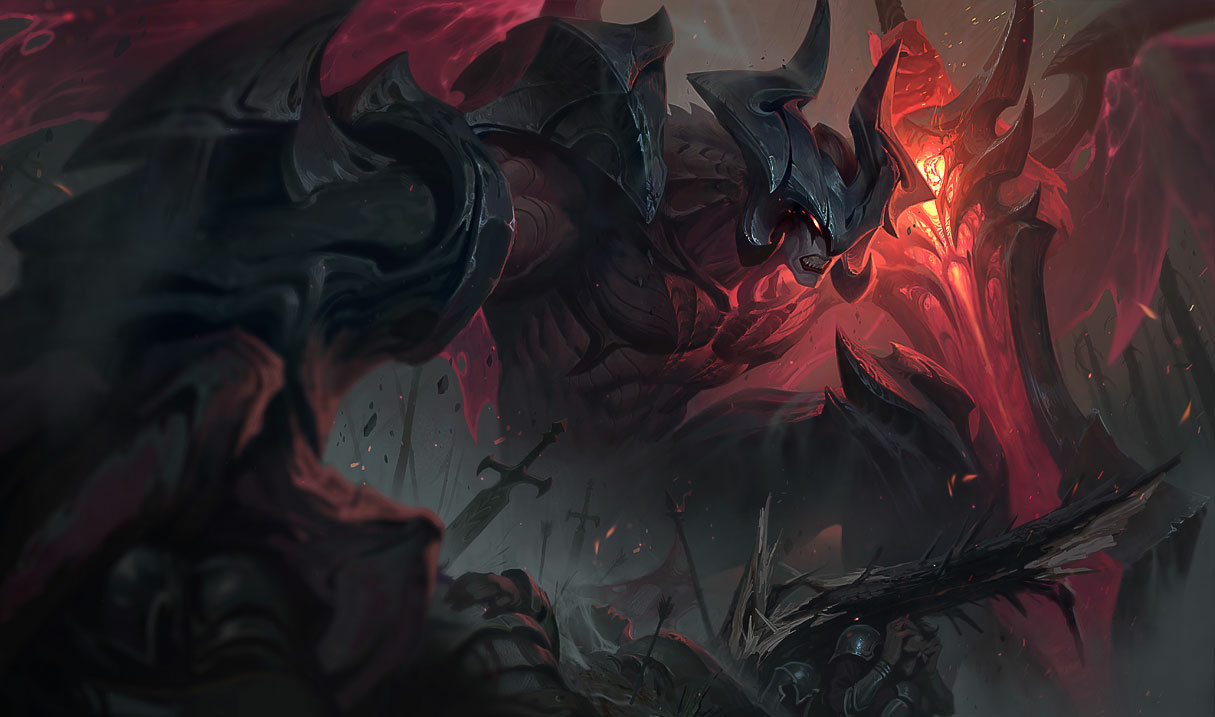
Anti-Heal Items LoL: When to Buy Grievous Wounds
Grievous Wounds items shut down enemy healing — but only against the right target. See which anti-heal item to buy per champion, and when to skip it.
Buildzcrank Team Published
Anti-heal items in League of Legends, Grievous Wounds sources like  Executioner's Calling Executioner's Calling 800 gold 15 Attack Damage
Grievous Wounds
Dealing physical damage to champions applies 40% Wounds for 3 seconds. or
Executioner's Calling Executioner's Calling 800 gold 15 Attack Damage
Grievous Wounds
Dealing physical damage to champions applies 40% Wounds for 3 seconds. or  Morellonomicon Morellonomicon 2,850 gold 75 Ability Power
350 Health
15 Ability Haste
Grievous Wounds
Dealing magic damage to champions applies 40% Wounds for 3 seconds. , cut incoming healing and health regeneration by a flat percentage. Buy one the moment an enemy sustain champion starts winning fights they should be losing, on whoever in your composition actually lands damage on that target. Buy it too early, on the wrong carrier, or against the wrong champion, and it is a wasted item slot.
Morellonomicon Morellonomicon 2,850 gold 75 Ability Power
350 Health
15 Ability Haste
Grievous Wounds
Dealing magic damage to champions applies 40% Wounds for 3 seconds. , cut incoming healing and health regeneration by a flat percentage. Buy one the moment an enemy sustain champion starts winning fights they should be losing, on whoever in your composition actually lands damage on that target. Buy it too early, on the wrong carrier, or against the wrong champion, and it is a wasted item slot.
What Grievous Wounds Actually Does
Grievous Wounds is a debuff, not an item: every anti-heal item in the game just applies it. Once it lands on a target, that champion’s incoming healing and health regeneration (from abilities, items, runes, and passive regen alike) is reduced by 40% for 3 seconds. The debuff refreshes on reapplication; it does not extend or intensify.
Two things trip players up constantly. First, Grievous Wounds does not stack higher: if you and your jungler both apply it, the target still only takes the 40% reduction, not 80%. There is no benefit to two people buying anti-heal against the same target. Second, it only touches healing and regeneration: it has zero effect on shields. A champion who negates your damage with a shield (  Karma Karma the Enlightened One ,
  Janna Janna the Storm's Fury ,
  Lulu Lulu the Fae Sorceress ) is not a Grievous Wounds problem, no matter how tanky the fight feels.
The debuff applies the instant damage connects: on-hit for Bramble Vest and Thornmail, on physical damage dealt for Executioner’s Calling and Mortal Reminder, on ability damage for Oblivion Orb and Morellonomicon. That timing detail matters more than most players think: the 3-second window is short, so applying it a beat too early, before the healer commits to their sustain cooldown, often means it has already expired by the time it would have mattered.
The Anti-Heal Items and Who Builds Each
There are three entry points into Grievous Wounds, split by damage type and role, plus two upgrades you build toward naturally rather than rush.
Executioner's Calling Executioner's Calling 800 gold 15 Attack Damage
Grievous Wounds
Dealing physical damage to champions applies 40% Wounds for 3 seconds. (800g) is the AD version. It gives 15 AD and applies Grievous Wounds to champions you damage with physical attacks or abilities. This is the default pickup for any AD champion (top, jungle, ADC) facing a healing threat, because the AD is never wasted the way a pure defensive item can be.
 Oblivion Orb Oblivion Orb 800 gold 25 Ability Power
Grievous Wounds
Dealing magic damage to champions applies 40% Wounds for 3 seconds. (800g) is the mage and AP-assassin equivalent: 20 AP, same Grievous Wounds application on magic damage. Buy it as a component toward Morellonomicon rather than treating it as a dead-end purchase; the AP keeps your spike relevant even if the enemy healer dies or swaps out of the fight.
Oblivion Orb Oblivion Orb 800 gold 25 Ability Power
Grievous Wounds
Dealing magic damage to champions applies 40% Wounds for 3 seconds. (800g) is the mage and AP-assassin equivalent: 20 AP, same Grievous Wounds application on magic damage. Buy it as a component toward Morellonomicon rather than treating it as a dead-end purchase; the AP keeps your spike relevant even if the enemy healer dies or swaps out of the fight.
 Bramble Vest Bramble Vest 800 gold 30 Armor
Thorns
When hit by an Attack, deal magic damage to the attacker and apply 40% Wounds for 3 seconds if they are a champion. (800g) is the tank and on-hit route. Unlike the other two, it triggers passively off taking basic attacks, not dealing damage, which makes it the correct pickup for a frontline tank or support who is not the team’s primary damage source but is guaranteed to get hit. It upgrades into
Bramble Vest Bramble Vest 800 gold 30 Armor
Thorns
When hit by an Attack, deal magic damage to the attacker and apply 40% Wounds for 3 seconds if they are a champion. (800g) is the tank and on-hit route. Unlike the other two, it triggers passively off taking basic attacks, not dealing damage, which makes it the correct pickup for a frontline tank or support who is not the team’s primary damage source but is guaranteed to get hit. It upgrades into  Thornmail Thornmail 2,450 gold 150 Health
75 Armor
Thorns
When struck by an Attack, deal magic damage to the attacker and apply 40% Wounds for 3 seconds if they are a champion. later, keeping the same passive on a full tank item.
Thornmail Thornmail 2,450 gold 150 Health
75 Armor
Thorns
When struck by an Attack, deal magic damage to the attacker and apply 40% Wounds for 3 seconds if they are a champion. later, keeping the same passive on a full tank item.
For the two completed items:  Mortal Reminder Mortal Reminder 3,000 gold 35 Attack Damage
30% Armor Penetration
25% Critical Strike Chance
Grievous Wounds
Dealing physical damage applies 40% Wounds to enemy champions for 3 seconds. builds from Executioner’s Calling and adds armor penetration, making it a natural core-slot item for AD champions rather than a situational one. Morellonomicon Morellonomicon 2,850 gold 75 Ability Power
350 Health
15 Ability Haste
Grievous Wounds
Dealing magic damage to champions applies 40% Wounds for 3 seconds. builds from Oblivion Orb and folds into most AP mage builds anyway (it is a strong item on its own merits), so buying the Oblivion Orb component early rarely costs you tempo.
Mortal Reminder Mortal Reminder 3,000 gold 35 Attack Damage
30% Armor Penetration
25% Critical Strike Chance
Grievous Wounds
Dealing physical damage applies 40% Wounds to enemy champions for 3 seconds. builds from Executioner’s Calling and adds armor penetration, making it a natural core-slot item for AD champions rather than a situational one. Morellonomicon Morellonomicon 2,850 gold 75 Ability Power
350 Health
15 Ability Haste
Grievous Wounds
Dealing magic damage to champions applies 40% Wounds for 3 seconds. builds from Oblivion Orb and folds into most AP mage builds anyway (it is a strong item on its own merits), so buying the Oblivion Orb component early rarely costs you tempo.
Decision Table: Enemy Champion to Item

Most guides tell you to “buy anti-heal against healers” without saying which healers actually justify the item slot. Not every champion with a heal in their kit is a Grievous Wounds priority: some sustain is small enough that the 40% reduction barely changes the fight. Use this table as a starting reference, then confirm against the actual damage you are dealing in that specific game: the same reason aggregate item win rates can mislead you applies here: a table cannot see your specific matchup.
| Enemy champion | Why they need it | Item to prioritize |
|---|---|---|
 Aatrox Aatrox the Darkin Blade Aatrox Aatrox the Darkin Blade | Passive heals scale with missing HP in extended fights | Executioner’s Calling → Mortal Reminder (whoever fights him in lane) |
 Vladimir Vladimir the Crimson Reaper Vladimir Vladimir the Crimson Reaper | Omnivamp on every ability, worse the longer the fight runs | Oblivion Orb → Morellonomicon (mid laner or whoever poking him) |
 Soraka Soraka the Starchild Soraka Soraka the Starchild | Team-wide heal from range, the reason her comps win late fights | Bramble Vest/Thornmail on whoever engages her, Executioner’s Calling on the carry diving her |
 Dr. Mundo Dr. Mundo the Madman of Zaun Dr. Mundo Dr. Mundo the Madman of Zaun | Regenerates a percentage of missing HP per second, ignores small poke entirely | Executioner’s Calling early, Mortal Reminder as a core item, not a situational one |
 Warwick Warwick the Uncaged Wrath of Zaun Warwick Warwick the Uncaged Wrath of Zaun | Omnivamp on Q and ultimate in skirmishes and jungle duels | Bramble Vest for the jungler dueling him, Executioner’s Calling for laners he ganks |
 Yuumi Yuumi the Magical Cat Yuumi Yuumi the Magical Cat | Passive heal on her host scales with missing HP over time | Anti-heal on whoever you are trying to kill, not on Yuumi herself: she is rarely targetable |
Role matters as much as the champion: a support Bramble Vest into a Soraka is about surviving her poke long enough to all-in, while an ADC’s Executioner’s Calling into the same matchup is about making sure a kill actually sticks once you commit.
When NOT to Buy Anti-Heal
The most common anti-heal mistake is not skipping it when you need it: it is buying it against champions whose sustain lands after the fight, when the debuff has already expired.  Garen Garen The Might of Demacia is the clearest example: his passive regeneration only kicks in once he has been out of combat for several seconds, well past the 3-second Grievous Wounds window. Reducing healing he is not receiving during the fight does nothing.
The same logic applies to  Tahm Kench Tahm Kench The River King healing off his passive between engagements, and to any tank stacking
  Warmog's Armor Warmog's Armor 3,100 gold 1000 Health
100% Base Health Regen
Warmog's Heart
If you have 2000 bonus Health and have not taken damage within 8 seconds, restore Health per second.
Warmog's Vitality
Gain bonus Health equal to 12% of your Item Health (0). for its out-of-combat regeneration passive. If the healing you are trying to punish happens in the 30 seconds between skirmishes rather than during them, an anti-heal item is a wasted gold slot: you are better off with raw damage or defensive stats that help you win the fight outright.
Warmog's Armor Warmog's Armor 3,100 gold 1000 Health
100% Base Health Regen
Warmog's Heart
If you have 2000 bonus Health and have not taken damage within 8 seconds, restore Health per second.
Warmog's Vitality
Gain bonus Health equal to 12% of your Item Health (0). for its out-of-combat regeneration passive. If the healing you are trying to punish happens in the 30 seconds between skirmishes rather than during them, an anti-heal item is a wasted gold slot: you are better off with raw damage or defensive stats that help you win the fight outright.
Shields are the second trap. Grievous Wounds does not touch shields at all, so building it into a Lulu Lulu the Fae Sorceress or Janna Janna the Storm's Fury support thinking it will “stop their sustain” misreads what those champions are doing to you. If the problem is a shield absorbing your damage rather than health being restored after it lands, look at  Serpent's Fang Serpent's Fang 2,500 gold 55 Attack Damage
15 Lethality
Shield Reaver
Damaging an enemy champion reduces Shields they gain by % for 3 seconds.
If they were not already affected by Shield Reaver
, reduce Shields on them by %. instead: a completely different tool for a different problem.
Serpent's Fang Serpent's Fang 2,500 gold 55 Attack Damage
15 Lethality
Shield Reaver
Damaging an enemy champion reduces Shields they gain by % for 3 seconds.
If they were not already affected by Shield Reaver
, reduce Shields on them by %. instead: a completely different tool for a different problem.
Finally, do not rush anti-heal into a matchup where the enemy’s healing is marginal. A champion with a small self-heal on a long cooldown is not worth an 800g item slot that could go toward your core damage or survivability instead. Anti-heal earns its slot when sustain is actively deciding fights, not as a reflexive purchase the moment you see any heal icon on the enemy team.
Timing It Right in Fights
Owning an anti-heal item is not the same as using it correctly. Because the debuff only lasts 3 seconds, the goal is to land it right as the healer commits their sustain, not on your first point of contact in the fight, and not as an afterthought once they are already dead or have disengaged.
In practice, that means the player carrying anti-heal should be the one most likely to land consistent damage on the healing target throughout the fight, not necessarily the one who initiates it. A jungler with Bramble Vest who engages and then peels off is often a worse carrier for the item than a duelist or ADC who stays on the target for the full engagement. If your team has two candidates (say, a bruiser top laner and an ADC both facing a sustain-heavy enemy comp) the item usually belongs on whoever has the longer effective time-on-target, not whoever hits first.
This is exactly the kind of decision that depends on the specific game, not a general rule: who is actually dealing sustained damage to the healer changes fight to fight based on positioning, cooldowns, and who the enemy focuses. Tools like buildzcrank read your live match state and flag when an anti-heal purchase actually matters for your specific matchup, instead of leaving you to guess from a static build guide.
Frequently Asked Questions About Anti-Heal in LoL
Does Grievous Wounds stack if two teammates build anti-heal?
No. The debuff is a flat 40% reduction regardless of how many sources apply it: a second anti-heal item on the same target is wasted gold. Coordinate so only one player builds it against a given healer.
Does anti-heal affect shields in League of Legends?
No. Grievous Wounds only reduces healing and health regeneration. It has zero effect on shields, so it does nothing against champions like Lulu, Janna, or Karma who protect allies with shields instead of heals.
What is the cheapest anti-heal item in LoL?
Executioner's Calling, Oblivion Orb, and Bramble Vest are all 800 gold components that apply Grievous Wounds immediately, you do not need to complete the full item to get the effect.
Should supports build anti-heal or should the carry?
Whoever lands consistent damage on the healing target for the longest stretch of the fight, not automatically the support. A tank support's Bramble Vest works well if they stay on the target, but an ADC or bruiser with better sustained damage is often the better carrier.
Is anti-heal worth building against a champion with a small self-heal?
Usually not. An 800g-plus item slot is expensive against marginal sustain. Save anti-heal for champions whose healing is actively winning them fights, not any champion with a heal icon on their kit.
Anti-heal is a targeted counter, not a default purchase. Check whether the enemy’s sustain lands during the fight or after it, confirm you have someone who can consistently damage the healer, and buy the item that matches your damage type. Skip it against Garen, Tahm Kench, and shield-based supports: that gold does more work elsewhere. For the rest of your build order, the LoL itemization guide covers the full decision framework beyond anti-heal, from starting items through tech-slot choices based on game state.