
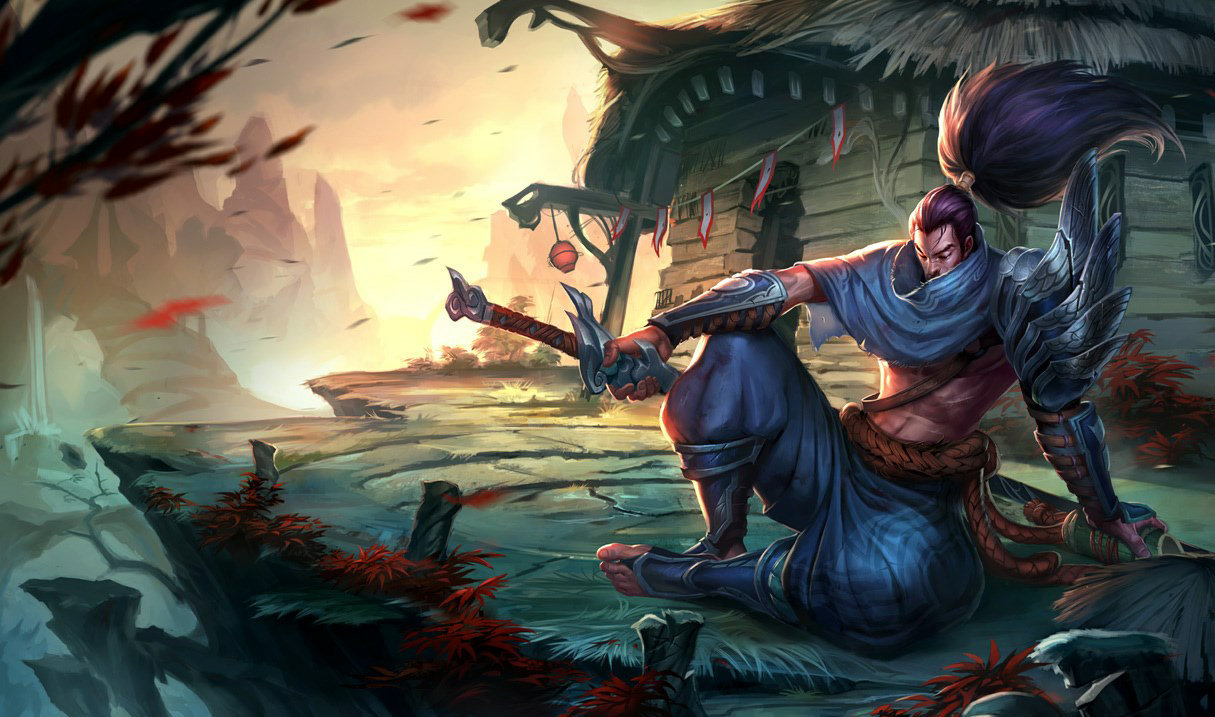
Why Static Build Guides Fail in LoL 2026
Static build sites like U.GG and Mobafire show you averages, not answers. Here's why one build never fits all — and how adaptive itemization actually wins games.
Buildzcrank Team Published Updated
You load into champion select, lock in your main, and open the same tab you always do, U.GG, Mobafire, or Mobalytics. You copy the top-voted build, hit “accept” on the rune page, and head into the game. It’s a ritual millions of players repeat every day. And it’s also one of the main reasons they keep losing.
Static build guides are built on a lie: that one configuration of items and runes is correct across all games. In 2026, with 172 champions, 220+ items, and an enemy team that changes every match, that assumption breaks down fast. This article explains exactly where static guides fail, and what a better approach looks like.
What Static Build Guides Actually Are
Static build guides work by aggregating data from tens of millions of ranked games. Sites like U.GG, Mobafire, and Mobalytics take every game played by a champion, filter by rank range, and surface whatever combination of runes and items produced the highest average win rate. Then they present it as the build.
That model is genuinely useful for one thing: learning the baseline. If you’ve never played Yasuo before, copying the U.GG page tells you which starting items matter and which keystones have synergy with his kit. It’s a shortcut to “not completely wrong.”
The problem starts when players treat that baseline as a fixed answer rather than a starting point. The build on screen was optimal for an average of millions of games. Your game (right now, against this specific enemy team, with this specific lead or deficit) is not average. It’s one context that the aggregate has never seen.
Static guides also have a freshness problem. Community guides on Mobafire are written by individual players and updated manually. In a game that patches every two weeks, popular guides routinely run 1–2 patches behind. The data-driven sites (U.GG, op.gg) update faster, but they still show you what won historically, not what will win tonight on 26.10.
Knowing a build guide’s limitations doesn’t mean ignoring it: it means using it correctly: as a baseline to deviate from, not a script to follow.
The Variables Static Guides Can’t Capture
League of Legends in 2026 has 172 champions and over 220 items. Season 2 removed Mythic item restrictions, which means build order is now entirely determined by context: there’s no mandatory first item locking you in. That flexibility is the game’s strength. It’s also what makes a single static answer structurally impossible.
Here are the variables that change the correct item build in every game:
Enemy team composition. Playing  Yasuo Yasuo the Unforgiven mid into three AP carries? You might skip
  Youmuu's Ghostblade Youmuu's Ghostblade 2,800 gold 55 Attack Damage
18 Lethality
4% Move Speed
Haunt
Gain Move Speed while out of combat.
Wraith Step
Gain Move Speed and Ghosting for seconds. entirely and rush armor and a Banshee’s. Playing into three tanks? Armor penetration becomes a core stat, not an option. A static guide doesn’t know your enemy roster: it picks the build that worked on average across all compositions.
Youmuu's Ghostblade Youmuu's Ghostblade 2,800 gold 55 Attack Damage
18 Lethality
4% Move Speed
Haunt
Gain Move Speed while out of combat.
Wraith Step
Gain Move Speed and Ghosting for seconds. entirely and rush armor and a Banshee’s. Playing into three tanks? Armor penetration becomes a core stat, not an option. A static guide doesn’t know your enemy roster: it picks the build that worked on average across all compositions.
Your team’s needs. If your team has zero frontline and you’re the only champion who can absorb damage, a defensive item slot is no longer a luxury. Static guides are built for solo-carry scenarios. Real games have team context.
Gold and timing. Whether you’re 200g ahead or 400g behind at the first back changes which item component you can afford. Getting ahead on Duskblade by two minutes can change an entire lane dynamic. Static guides assume you always hit exact gold thresholds.
Game state. Are you 20 minutes in and already five kills ahead? You want to spike and end. Are you behind and stalling for late-game scaling? An entirely different build path makes sense. Win rate data ignores where you are in the game: it only knows whether the game eventually ended in a win.
Your rune page interactions. Electrocute synergizes with burst combos; Conqueror rewards extended fights. If you swapped a rune mid-game (which you can’t), the item build that maximizes that rune changes too. Static guides pick one rune page and one item page: real games don’t always behave as assumed.
The Win Rate Trap
A build labeled “53% win rate” on U.GG sounds good. But what does that number actually mean?
It means that across every ranked game where this champion built these items (at all skill levels, against every possible team composition, in both winning and losing scenarios) the end result was a win 53% of the time. It’s an average across millions of wildly different contexts.
Now consider your actual game: you’re 0/2 at 15 minutes against a fed  Zed Zed the Master of Shadows mid and the enemy team has three assassins. The win rate data will never tell you whether the “53% build” is the right call in that situation, because the database doesn’t slice that finely. U.GG doesn’t show you “win rate when you’re 0/2 at 15 minutes, enemy has Zed/Talon/Khazix, and you need to survive lane.” That query doesn’t exist in any static tool.
This is what statisticians call Simpson’s paradox in practice: an aggregate trend that looks positive can mask the opposite trend in specific subgroups. The 53% average might be driven entirely by games where the player was already ahead, and in your situation (behind, against assassins), the actual win rate with that build could be 38%.
Static guides can’t segment this. They show you population-level averages as if they were individual prescriptions. The higher you climb, the more this gap costs you, because opponents at higher elo exploit every suboptimal item choice. A Diamond player building the Plat-average build into the wrong matchup is giving away free edges.
How Patches Break Static Guides Overnight
Patch 26.10 dropped on May 13, 2026. It changed Gluttonous Greaves: raising the cost from 950g to 1,000g and restructuring its omnivamp stacking from 1% per stack (6 stacks max) to 0.6% per stack (10 stacks to cap). On the surface, a minor change. In practice, it shifted Greaves from an efficient early-game stat dump to a later power spike, which means the build order that maximized Greaves pre-26.10 is now suboptimal.
The same patch hit Deathfire Touch’s damage formula and gave Lee Sin a modernized rework that changes his defensive scaling. Every champion who used Deathfire Touch as a core pick needed a build recalculation. Every Lee Sin guide written before patch day is now at least partially wrong.
How fast do community guides update? On Mobafire, the most popular guides are updated at the author’s discretion. High-view guides can sit one or two patches behind for weeks: sometimes longer if the author is inactive. Data-driven sites like U.GG update faster, but their win rate data takes 24–72 hours to accumulate meaningful sample size after a patch drops.
That gap, between the patch landing and the guides catching up, is exactly when you’re most likely to pick up bad habits from stale data.
The meta in League resets every two weeks. Static guides by definition chase that reset rather than lead it. Every time you copy a build from a guide, you should be asking: when was this written, and what changed since?
What High-Elo Players Actually Do
Watch any Challenger VOD and you’ll notice something: the player checks the scoreboard and the enemy item builds at every base. They’re not following a preset: they’re reading the game state and making item decisions based on what they see.
High-elo players treat the standard build as a default, not a mandate. They ask a few questions at every back:
- “Who is the biggest threat right now?” If the enemy mid is 4/0 on
 Akali Akali the Rogue Assassin mid , a defensive component to nullify her burst is worth losing some offensive stats.
 - “Do I need to spike now or scale?” If your team is already winning every fight, buying toward a full item spike makes sense. If you’re stalling, a component that unlocks scaling is correct.
- “What does my team need?” If you’re the only damage source and your support can’t peel, building one defensive item extends how long you survive, which is how you eventually deal your damage.
In practice this looks like: a Yasuo player who normally builds Youmuu's Ghostblade Youmuu's Ghostblade 2,800 gold 55 Attack Damage
18 Lethality
4% Move Speed
Haunt
Gain Move Speed while out of combat.
Wraith Step
Gain Move Speed and Ghosting for seconds. first might delay it to grab  Edge of Night Edge of Night 3,000 gold 50 Attack Damage
15 Lethality
250 Health
Annul
Grants a Spell Shield that blocks the next enemy Ability. when facing a heavy AP poke lane, the magic shield matters more than 15 extra AD in that specific lane.
Edge of Night Edge of Night 3,000 gold 50 Attack Damage
15 Lethality
250 Health
Annul
Grants a Spell Shield that blocks the next enemy Ability. when facing a heavy AP poke lane, the magic shield matters more than 15 extra AD in that specific lane.
This isn’t guesswork. It’s pattern recognition built from knowing what each item does in different scenarios, not just what the win rate database says to buy. The best players have internalized hundreds of these if/then decisions. Static guides can’t replicate that reasoning: they can only show you the most common outcome.
How AI Build Recommendations Work Differently
The gap between static guides and adaptive play is fundamentally an information problem. A static guide has access to historical averages. Your game, right now, has live data: exact enemy item builds, current kill scores, jungle tracking, your team’s current gold, which Dragon soul is at stake. A static guide structurally cannot use any of that.
AI build tools approach the problem differently. Instead of asking “what won most often across all games,” they ask “what is optimal given what is actually happening in this game?” Tools like buildzcrank read your live game state (champion matchups, enemy builds, current score) and generate recommendations that account for your specific context, not the population average.
The difference becomes clearest in mid-game item choices. At 15 minutes you base with 1,800 gold. A static guide says: “buy component A.” An AI recommendation might say: “the enemy Jinx is 5/1 and just finished her core. You need a defensive component before your next fight, then rotate to offensive.” That’s not data a win rate table can surface. It requires knowing the current game.
For a deeper look at how this works technically, see how AI build recommendations are generated in real time.
The ability to adapt itemization mid-game is also one of the core skills that separates climbing ranks from stalling. If you want to understand how the best players approach decisions like this more broadly, the complete LoL climbing guide for 2026 covers the macro context that item choices sit inside.
AI recommendations don’t replace game knowledge: they compress the pattern-matching that high-elo players have spent thousands of games developing into a format that’s accessible in real time, during your game, when it actually matters.
Frequently Asked Questions
Are U.GG builds accurate?
U.GG builds are statistically accurate for the average game, they reflect the items that produce the highest win rate across millions of games in your rank range. The problem is that average game wins don't translate directly to your specific game. Use U.GG to learn the baseline build, then develop the judgment to deviate when the game state demands it.
Should I follow Mobafire guides?
Mobafire guides are useful for learning a champion's identity and understanding why certain items synergize with certain kits. The main risk is freshness: popular guides often lag 1–2 patches behind. Always cross-check the guide's last-updated date against the current patch before trusting the specific item order.
What is adaptive itemization in League of Legends?
Adaptive itemization means building items based on what will perform best in your specific game (accounting for enemy composition, your gold state, and your team's needs) rather than following a preset item order. It's the skill that distinguishes mid-Platinum from high-Diamond play: the mechanical execution is often similar, but the decision-making is not.
Why do pro players build differently from recommended builds?
Pro players have internalized thousands of situational item rules. When they deviate from a standard build, it's because they're responding to a specific game state that makes another item stronger right now. On average, U.GG builds represent what works for most players in most situations, but pros are playing in unique situations, against opponents who punish every suboptimal choice.
How do I know when to deviate from a build guide?
The clearest signals are: the enemy is heavily tanky (buy armor pen), the enemy has heavy AP burst (buy magic resistance or a spell shield component), you're so far ahead that completing a power spike item will win the next fight, or you're so far behind that a defensive item extends your survivability until you scale. If none of those apply, the standard build is probably correct.
Static build guides gave millions of players a way to learn the game faster. That’s genuinely valuable. But treating them as fixed answers, rather than starting points, is one of the most common invisible mistakes holding players back in 2026.
The game rewards the player who reads the situation, not the one who memorizes the spreadsheet. Start with the baseline, then ask the right questions at every back: who’s the threat, what does your team need, and can you afford to spike right now? The answers change every game, and your build should too.