
Here’s a claim the patch notes back up better than most players expect: the biggest meta shifts of Season 26 didn’t come from a champion getting buffed or nerfed. They came from Riot changing what items exist and who can buy them. Champion tuning moves one kit at a time. Itemization tuning moves every champion who touches that item slot, in every role, on the same patch. Trace the last six months of patches — 26.1’s crit reset, 26.9’s new starters, 26.13’s Doran’s Helm nerf — and the pattern holds: items rewired the meta, and champion balance mostly reacted to it.
The Real Driver of Season 26’s Meta
Ask most players what changed the meta this season and they’ll point at a champion: whoever got hit with a 5% damage nerf, or whoever’s been first-picked at every tournament. That’s the visible layer. The layer underneath is Riot’s own official patch notes, and it tells a different story: three of the six biggest structural shifts since Patch 26.1 came from item changes, not champion changes.
That’s not a coincidence of this particular season — it’s a structural fact about how the two systems work. A champion nerf touches one kit. An item nerf touches every champion who was buying that item, across every role that had access to it, on the same patch cycle. When Riot reworked crit damage in Patch 26.1, it didn’t retune one champion’s power level. It retuned the value of every crit item in the game simultaneously, which cascaded into every ADC, every crit-based bruiser, and every hybrid build that leaned on Passive: Critical strikes deal 235% damage (if you have 60%+ crit chance). Infinity Edge Infinity Edge 3400 gold
Patch 26.1: The Crit Reset and Role Quest Overhaul
Season 26 opened with the single largest itemization pass of the year, per Riot’s official Patch 26.1 notes. The headline change was quiet on paper but loud in practice: base critical strike damage across the entire game returned to 200%, after seasons of inflated crit multipliers. Every crit item built around the old baseline needed a rework to avoid becoming either useless or overtuned overnight.
Passive: Critical strikes deal 235% damage (if you have 60%+ crit chance). Infinity Edge Infinity Edge 3400 gold
Passive: Spellblade. Attacks deal bonus physical damage based on AD. Essence Reaver Essence Reaver 3000 gold
The other half of Patch 26.1 folded entire items out of existence and into role-specific quest systems instead: Symbiotic Soles and Vigilant Wardstone were both removed, their effects absorbed into the mid lane and support role quests respectively. That’s a category of change a champion patch cannot make — deleting a purchasable option and replacing it with a passive system tied to an entire role, at the same moment for every champion in that role.
Patch 26.9: Filling the Gaps Between Classes
By Patch 26.9, the pattern repeated at the starting-item level instead of the legendary tier. Riot added +8 AD, +15% Attack Speed. Omnivamp: 1.5%. No bonus HP. +110 HP, +10 Armor, +10 Magic Resist. Passive: +5 physical damage to minions. +45 Movement Speed, +4% Omnivamp. Passive: permanent Omnivamp stacks on takedowns. +40 AD, +45 AP, +30% Attack Speed. Energized attacks chain lightning that applies on-hit effects. Doran's Bow Doran's Bow 400 gold
  Doran's Helm Doran's Helm 450 gold
  Gluttonous Greaves Gluttonous Greaves 1000 gold
  Statikk Shiv Statikk Shiv 2900 gold
None of that touched a single champion’s base stats or ability numbers. What it did was hand marksmen and bruisers starting items with fundamentally different stat profiles than existed a patch earlier — Doran’s Helm in particular offered flat HP plus dual resistances in a starting slot that previously had no resistance-focused option at all. A champion who was struggling into aggressive lane matchups didn’t need a buff to fight back; they needed an item that existed yet.
This is the mechanism worth internalizing: a new starting item doesn’t just add one more shopping option, it changes the entire early-game math for every champion that role can play. That’s exactly what set up the next patch’s problem — for the full item-by-item breakdown of that patch, see our Patch 26.9 new items coverage.
When an Item Crosses Its Own Role: Doran’s Helm on ADC

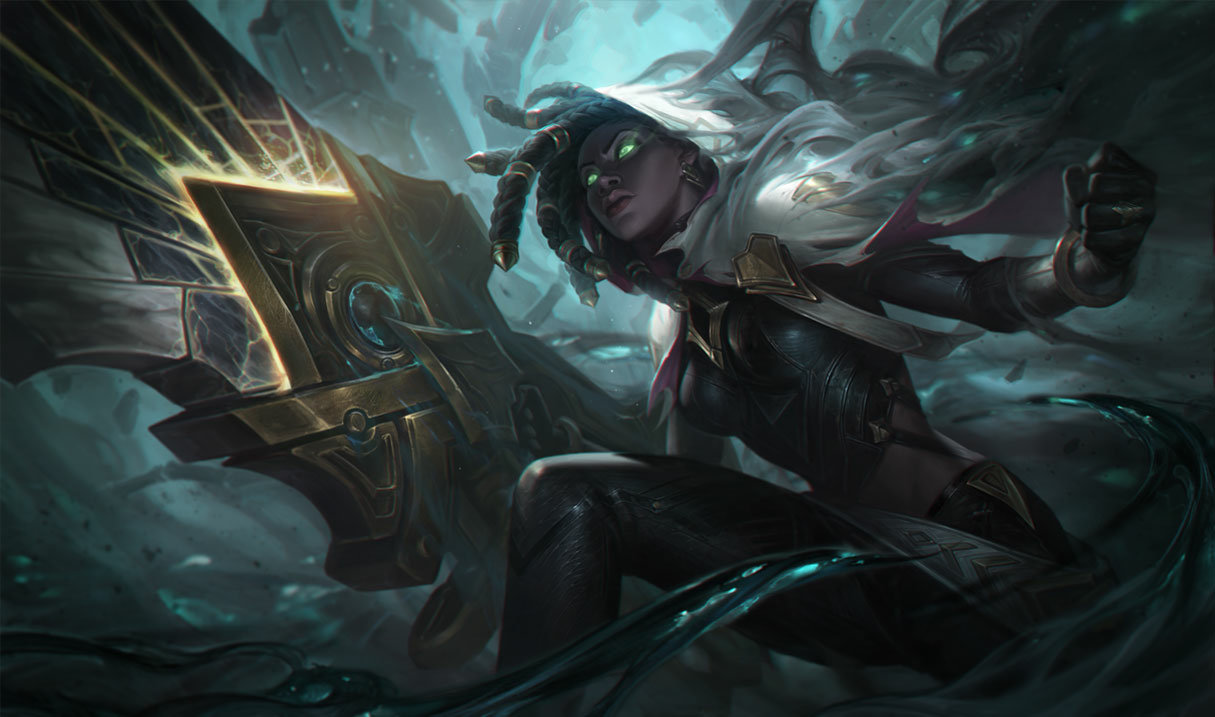
Doran’s Helm wasn’t designed as an ADC item. Its dual resistances and minion-clear passive read as a generalist tank-adjacent starter for lanes expecting early pressure — top and some junglers, on paper. By Patch 26.13, official patch notes confirmed it needed a nerf specifically because it had begun showing up on marksman builds, with  Senna Senna adc and
  Jhin Jhin adc named as the champions pulling it into the ADC role.
That’s the crossover moment that makes the structural point concretely. Senna and Jhin didn’t get buffed into relevance. An item built for a different role turned out to solve a problem those champions had — survivability into aggressive bot lane matchups — better than their intended starting options did. Once that discovery reaches the broader playerbase, it stops being a tech pick and starts being a build path, and the item balance team has to react to a role-crossing pattern that no amount of champion tuning created or could fix.
This is also why item nerfs in patch notes often read as narrower than they are. “Doran’s Helm nerfed” sounds like a minor line change. In practice it was Riot correcting the fact that one item had quietly reshaped which starting item ADCs should default to — a decision point every marksman player in every game hits in the first ten seconds of a match. Compare that to a champion nerf: it only matters in the games where that specific champion is picked.
Why Item Balance Moves the Meta Faster Than Champion Balance

Line up the three changes covered so far and the scope difference is stark:
| Change | Patch | What it directly affected |
|---|---|---|
| Crit damage reset to 200% | 26.1 | Every crit item, every champion building crit, any role |
| Doran’s Helm and Statikk Shiv additions/rework | 26.9 | Every marksman and bruiser’s starting-item math |
| Doran’s Helm nerf | 26.13 | Every ADC who had adopted the crossover start |
A champion buff or nerf is scoped by design — it’s supposed to only move that champion’s win rate. An item change has no such containment. It moves every champion who has access to that item slot, which in practice means an entire role or an entire damage class shifts on the same patch note. That’s why item changes tend to produce the “why does everything feel different this patch” reaction, while champion changes produce the narrower “why is this one pick suddenly everywhere” reaction.
There’s a speed dimension too. A champion needs to actually get picked, played, and tracked before a balance problem is visible in the data — that can take weeks for a niche pick. An item’s effect shows up the moment enough players in a role start buying it differently, because the item doesn’t care which champion is holding it. Doran’s Helm went from a top-lane starter to an ADC balance patch note in roughly one PBE-to-live cycle once the crossover pattern reached critical mass.
What This Means for Your Builds
The practical lesson isn’t “read every patch note in full” — it’s that a build guide written even one item patch ago can be quietly wrong in ways a champion-focused tier list wouldn’t catch. If the item you’re told to rush got repriced, rebuilt from different components, or nerfed on your role specifically, the guide’s advice is stale even though the champion itself never changed.
That’s the gap tools like buildzcrank are built to close: reading the live game state and current item data instead of a snapshot frozen at whatever patch a guide was written for, so the build recommendation reflects what’s actually strong right now rather than what was strong when someone last updated a static page. Itemization moves fast enough in Season 26 that “current” has a shelf life measured in patches, not months.
None of this replaces understanding why an item works for your matchup — it just means the “why” needs refreshing as often as the items themselves do. The same logic applies to reading item win rate stats correctly: a number computed on last patch’s item costs and passives isn’t describing the item you’re buying today.
Frequently Asked Questions
What was the biggest itemization change of Season 26?
Patch 26.1's crit damage reset to a 200% baseline, which forced a rework of every crit item in the game — including Infinity Edge's cost, AD, and bonus crit damage — in a single patch.
Why was Doran's Helm nerfed in Patch 26.13?
Official patch notes confirmed it was nerfed because marksmen like Senna and Jhin had started using it as an ADC starting item, a role it wasn't originally balanced around.
Do item changes really matter more than champion buffs?
In scope, yes: an item change affects every champion with access to that item across every role at once, while a champion change is contained to that champion's own win rate and pick rate.
What items were added or reworked in Patch 26.9?
Doran's Bow and Doran's Helm were added as new starting items, Gluttonous Greaves replaced older boot enchant paths, and Statikk Shiv was reworked with an energized chain-lightning passive.
How should I adjust my builds when itemization changes this fast?
Treat any build guide as time-stamped to the patch it was written for, and re-check the item's current cost, components, and passive before assuming last patch's core build is still correct.
Champion tier lists make for an easier headline, but the patch notes tell the more honest story: Season 26’s meta has been rewritten from the item shop outward, not from a single champion’s numbers up. The crit reset in 26.1, the starting-item expansion in 26.9, and the Doran’s Helm correction in 26.13 aren’t three unrelated bullet points — they’re the same mechanism playing out three times, each one reshaping a role faster and more broadly than any champion patch could. Read the item changes first next time a patch drops, and the champion-level meta will make a lot more sense in hindsight.